
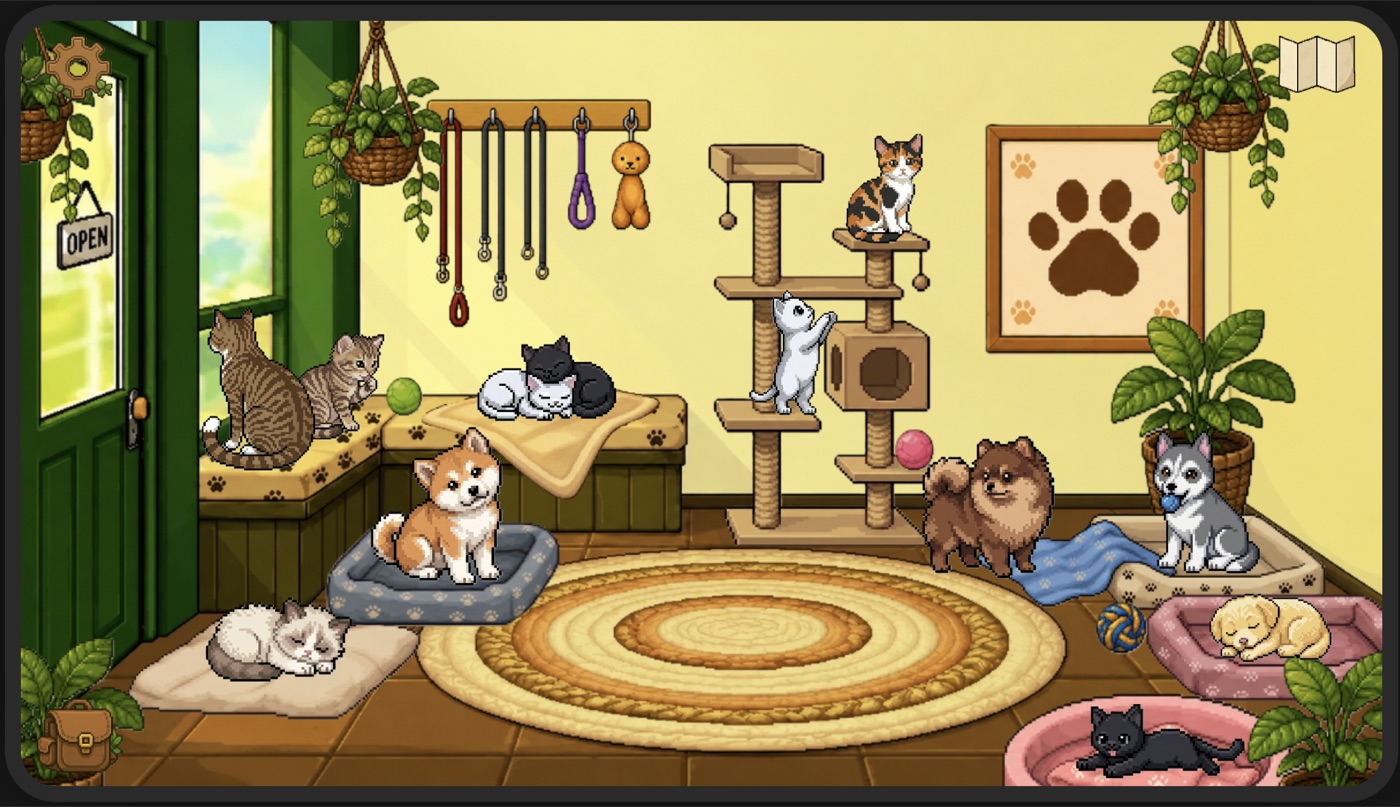
Potted is a pixel-art nursery game built around growing flowers, collecting plants, adopting pets, and arranging a little shop. Its central promise is gentle progress: a seed becomes a flower because the player tended it, and that flower becomes part of a place the player can make their own.
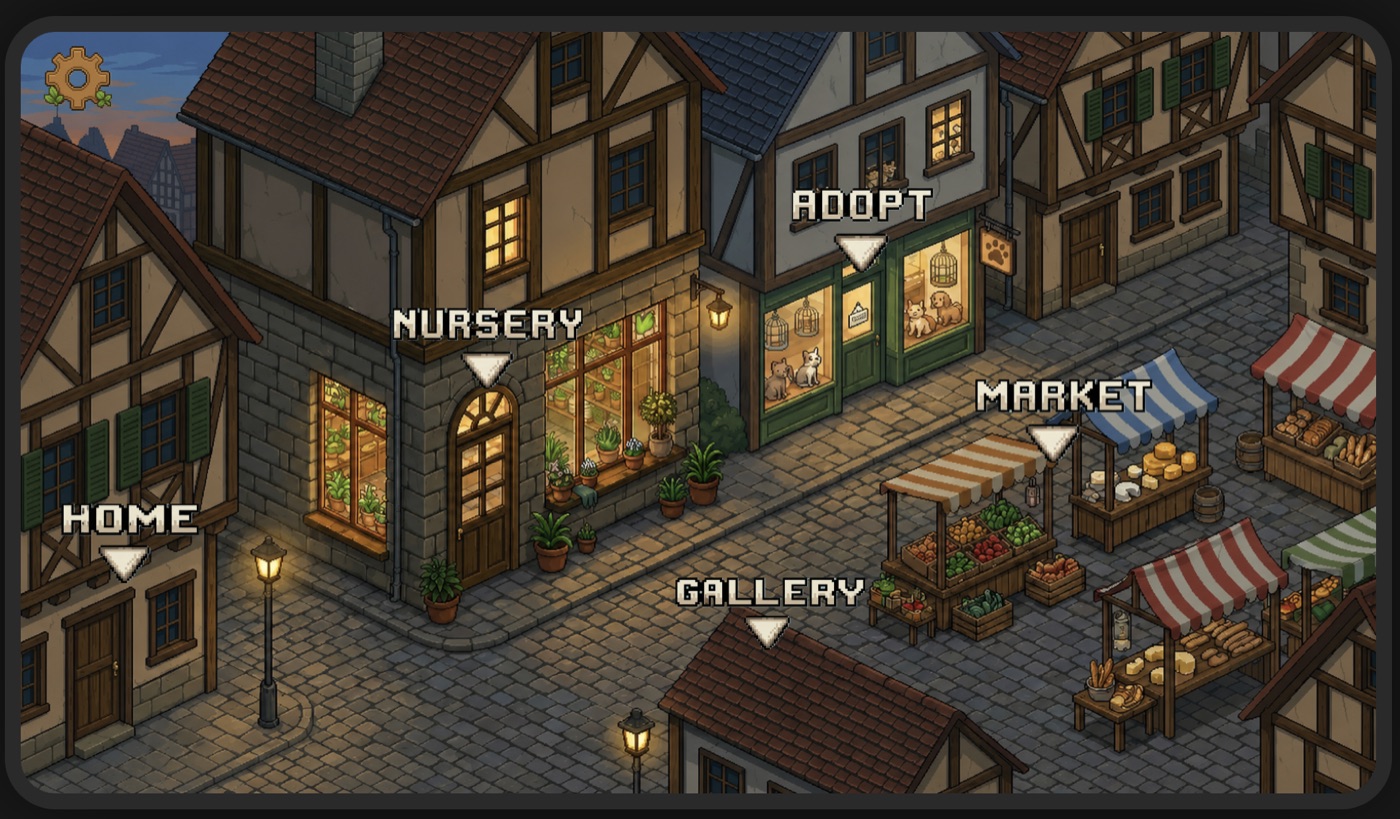
That promise creates a design test for every system. If planting, watering, and waiting are the core actions, then a shop, collection screen, home, and pet area should make those actions feel more meaningful—not compete with them. A map can make the world legible, but too many destinations can turn a calm routine into a checklist. A collection can reward attention, but it needs to remain understandable as it grows.
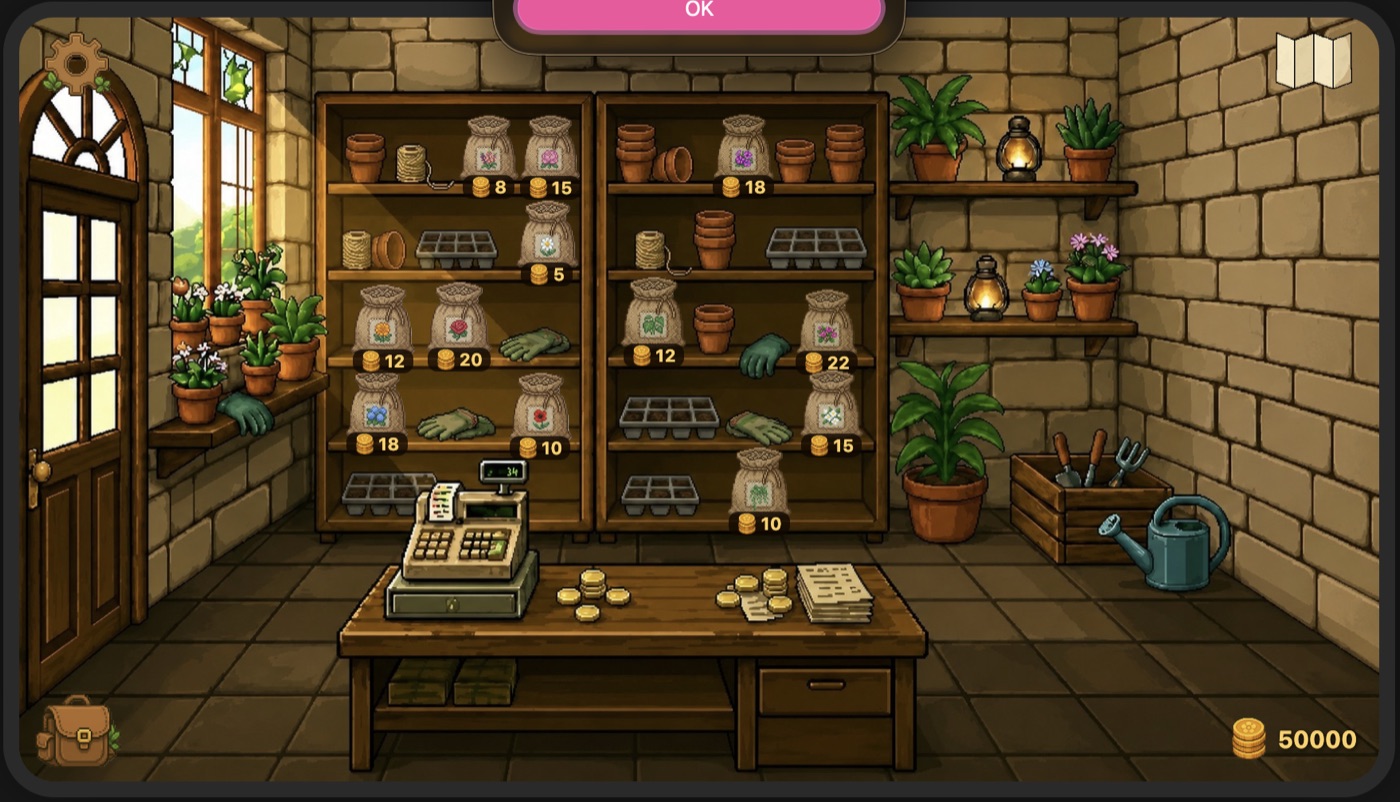
The core loop as described in the project README. Everything else in the game should support one of these five steps.
Questions I use to evaluate the loop
- Can a new player tell what to do next without a long tutorial?
- Does each visit offer a small satisfying action, even when a plant is still growing?
- Do decoration and collection deepen the feeling of ownership, or just add menus?
- Can the game feel rewarding without making missed days feel like failure?
Does the player care for a plant because it feels pleasant, or because the interface pressures them?
These are design questions rather than claims that every answer is solved. They give playtesting a focus: watch where a player pauses, what they remember on returning, and whether they choose to care for a plant because it feels pleasant or because the interface pressures them.
Project details and current source: github.com/Ishani018/Potted.